What to Know About Creatine Before You Take It
Creatine is one of the most researched sports supplements, but beginners still have questions: where is creatine found, who should take it, how much does it help, and how long does it take to work? This guide covers the essentials in plain English.
Creatine in a nutshell
Creatine is a compound your body makes naturally and stores mostly in your skeletal muscles. Your muscles use it to help rapidly restore adenosine triphosphate (ATP), a major source of energy for short, intense efforts such as lifting weights, sprinting or repeated hard sets.
Creatine is not a steroid and it does not build muscle on its own. It can help you train a little harder or complete more high-intensity work, which may support strength and muscle gains when combined with a suitable training plan, enough food and recovery.
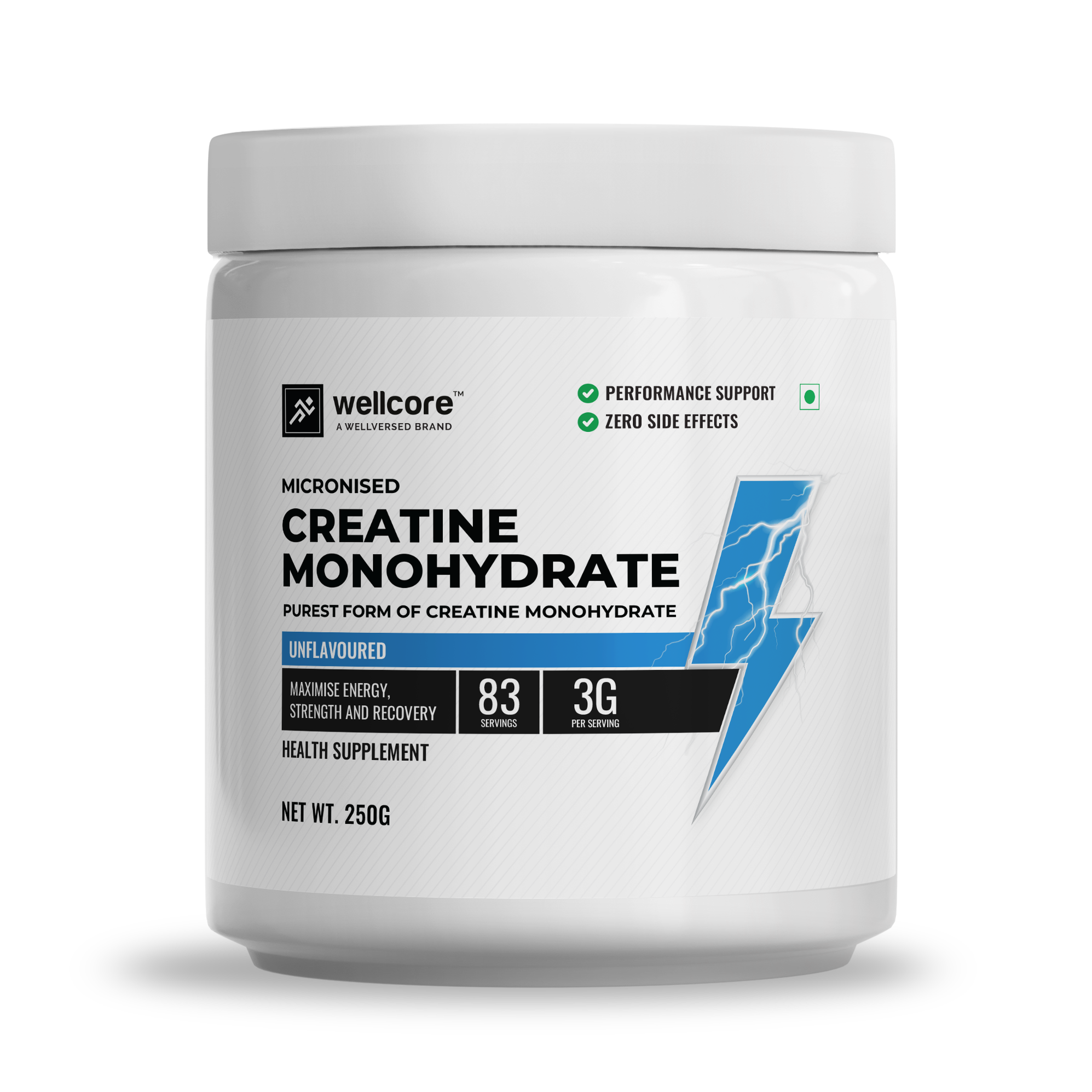
Creatine product example
Compare Wellcore Creatine
If you're considering a creatine supplement, check the ingredients, serving size, seller and current listing details before buying. This is a product example, not a requirement or personal recommendation.
Where is creatine naturally found?
Your body makes creatine from amino-acid building blocks, mainly in the liver and kidneys, with other tissues also involved in its production. Most of the creatine in your body is stored in skeletal muscle; a smaller amount is found in places such as the brain.
Food is another source. Meat and fish contain creatine, although the amount varies by food and preparation. Plant foods generally contain little to no creatine, so people who eat vegetarian or vegan diets often have lower dietary creatine intake. The body still makes creatine even when someone does not eat meat.
Where can creatine be found in food?
- Fish: Some fish, including salmon and herring, contain creatine.
- Meat: Beef and pork provide dietary creatine.
- Your body: Your body synthesizes creatine naturally and stores most of it in muscle.
- Supplements: Creatine powders and some sports products provide creatine in a measured serving.
If you are asking “where do I find creatine?” in a shop, look in the sports-nutrition or supplement section. Check the ingredient label and serving size rather than choosing a product based only on its flavour or marketing.
Who takes creatine?
Creatine is commonly used by adults who do resistance training, strength athletes and people doing sports with repeated short bursts of high-intensity effort. Some people use it to support training progress as they get older, but individual needs and medical circumstances differ.
You do not need to be a competitive athlete to be interested in creatine. However, it is not essential for everyone, and a supplement cannot replace balanced meals, training, sleep or hydration. Children and teenagers should not start sports supplements casually; they should involve a parent or guardian and a qualified healthcare professional. Anyone with kidney disease, relevant medical conditions, or medicines that may affect kidney function should ask a clinician before using creatine.
Who created creatine?
Creatine was first identified by French scientist Michel Eugène Chevreul in 1832, who isolated it from skeletal muscle. Later research explored how the body makes and uses it. Creatine supplements were not created by one single modern brand or inventor; they developed as scientists studied creatine's role in energy metabolism and sports performance.
What supplement has creatine?
The simplest option is a product labelled creatine monohydrate. It is widely studied and usually sold as an unflavoured powder, although flavoured powders, capsules and blends are also available. Some pre-workout or performance products include creatine, but the amount per serving can vary.
Check the label for the exact amount of creatine per serving. If a blend lists several ingredients without clearly stating how much creatine it contains, it is harder to compare with a plain product. You do not need a complicated blend to get creatine's established training benefits.
Creatine product example
Compare Wellcore Creatine
If you're considering a creatine supplement, check the ingredients, serving size, seller and current listing details before buying. This is a product example, not a requirement or personal recommendation.
How do you add creatine to your routine?
For many healthy adults who choose to supplement, a straightforward approach is to take 3–5 grams of creatine monohydrate each day. Mix the powder into water or another drink, following the product label. You can take it on training days and rest days.
A loading phase is optional. Some protocols use about 20 grams per day, split into several smaller servings, for 5–7 days before moving to a maintenance dose. This can raise muscle creatine stores more quickly, but it is not required. Taking 3–5 grams daily without loading gradually raises stores over several weeks and may be easier to tolerate.
There is no need to take more than the label recommends to try to force faster results. Larger doses at once may cause stomach discomfort for some people. Keep the powder dry in storage, use the scoop or a suitable scale to measure the serving, and drink fluids normally throughout the day.
For more practical detail, see how to use creatine and whether you can mix creatine with milk.
How much of an effect does creatine have?
The effect is real but not identical for everyone. Research most consistently supports improvements in repeated high-intensity exercise performance and training adaptations, particularly when creatine is paired with resistance training. Some people notice they can complete an extra repetition or maintain performance across repeated sets; changes in muscle size usually depend on training, diet and time.
Creatine may also increase body weight at first because muscles hold more water as creatine stores rise. That early scale change is not the same as gaining body fat. Results vary with starting muscle creatine levels, diet, training quality, adherence and individual response. Creatine is not a substitute for progressive training or adequate protein and calories.
How long until creatine starts to work?
With a loading phase, muscle creatine stores can rise substantially within about a week. Without loading, taking a regular daily dose often takes around three to four weeks to build stores toward a similar level. Performance changes may be gradual and depend on the exercise you do, so do not judge the supplement from a single workout.
Some people notice a change in training or body weight earlier than others. Keep your routine consistent and evaluate progress over several weeks rather than expecting an immediate feeling after each serving.
How long does creatine stay in your blood?
After a dose, creatine in the blood rises and then falls as it is taken up by tissues and processed. Research reports that blood creatine levels commonly peak around an hour after taking creatine monohydrate, but this is not the same as the time it takes for muscle stores to rise or the supplement's effects to disappear.
Muscle stores change more slowly than blood levels. After someone stops supplementing, elevated muscle creatine levels generally return toward baseline over several weeks, often around four to six weeks. You do not need to time each dose around a short blood-level window to get the usual benefits.
Is creatine safe?
Creatine monohydrate has a substantial research history in healthy adults when used appropriately. Common practical issues can include temporary water-weight gain and stomach discomfort, particularly with large servings. Safety evidence for a particular person depends on their health, age, medicines and product quality.
If you have kidney disease or another significant medical condition, take medicines that affect kidney function, are pregnant or breastfeeding, or are considering creatine for a minor, seek advice from a qualified healthcare professional before using it. Choose products with clear labels and buy from a seller you trust.
Read our creatine safety guide for more context. This article is educational and is not individual medical advice.
Creatine product example
Compare Wellcore Creatine
If you're considering a creatine supplement, check the ingredients, serving size, seller and current listing details before buying. This is a product example, not a requirement or personal recommendation.
Beginner checklist: what to know about creatine
- Creatine is naturally made by your body and is also found in meat and fish.
- Creatine monohydrate is the most researched supplement form.
- A common adult maintenance amount is 3–5 grams daily, but personal circumstances matter.
- Loading is optional; daily use without loading also raises muscle stores.
- Training, food, sleep and consistency still do most of the work.
- Check the label, serving size, seller and product quality before buying.
- Ask a healthcare professional first if you have a medical condition, take relevant medicines or are considering it for a teenager.
Frequently asked questions
Where is creatine found in the body?
Most of the body's creatine is stored in skeletal muscle. Smaller amounts are present in other tissues, including the brain.
Can I get enough creatine without supplements?
Your body makes creatine naturally, and meat and fish provide additional creatine. Whether a supplement is useful depends on your diet, goals and health circumstances.
Should I take creatine before or after a workout?
There is no single timing window that everyone must follow. Taking it consistently each day is more important than whether you take it immediately before or after training.
Does creatine work without exercise?
Creatine does not replace exercise. Its best-established sports benefits are seen in the context of repeated high-intensity exercise and training.
Does creatine work on the first day?
A dose changes blood levels relatively quickly, but raising muscle stores and seeing a training effect take longer. A loading protocol raises stores faster; a smaller daily dose works more gradually.
Keep learning
Research background: International Society of Sports Nutrition position stand on creatine and National Center for Complementary and Integrative Health overview. Checked 14 October 2026. Product information and availability can change.