Creatine Side Effects: What Should You Know?
Creatine monohydrate is one of the most researched sports supplements, and studies in healthy adults generally report a good safety profile when it is used appropriately. It is not completely free of possible side effects, though. Water-weight changes and digestive discomfort are among the issues people notice, while kidney and heart concerns need careful, evidence-based answers.
What are the common side effects of creatine?
Side effects vary from person to person. Many healthy adults tolerate creatine monohydrate well, but possible experiences include:
- Weight gain: body weight can rise as muscle stores more water, especially early in use. This is not the same as gaining body fat.
- Digestive discomfort: some people report bloating, nausea, loose stools or stomach discomfort, particularly with large servings or a loading phase.
- Changes in blood creatinine: creatine can affect creatinine levels, which may influence how a blood test estimates kidney function. This does not automatically mean kidney damage.
- Individual intolerance: a person may dislike the texture, taste or digestive effects of a particular product or formulation.
Not every symptom that begins after starting a supplement is necessarily caused by it. Food, illness, medicines, training load and other supplements can also matter. If symptoms are severe, persist, or worry you, stop relying on internet advice and speak with a qualified healthcare professional.
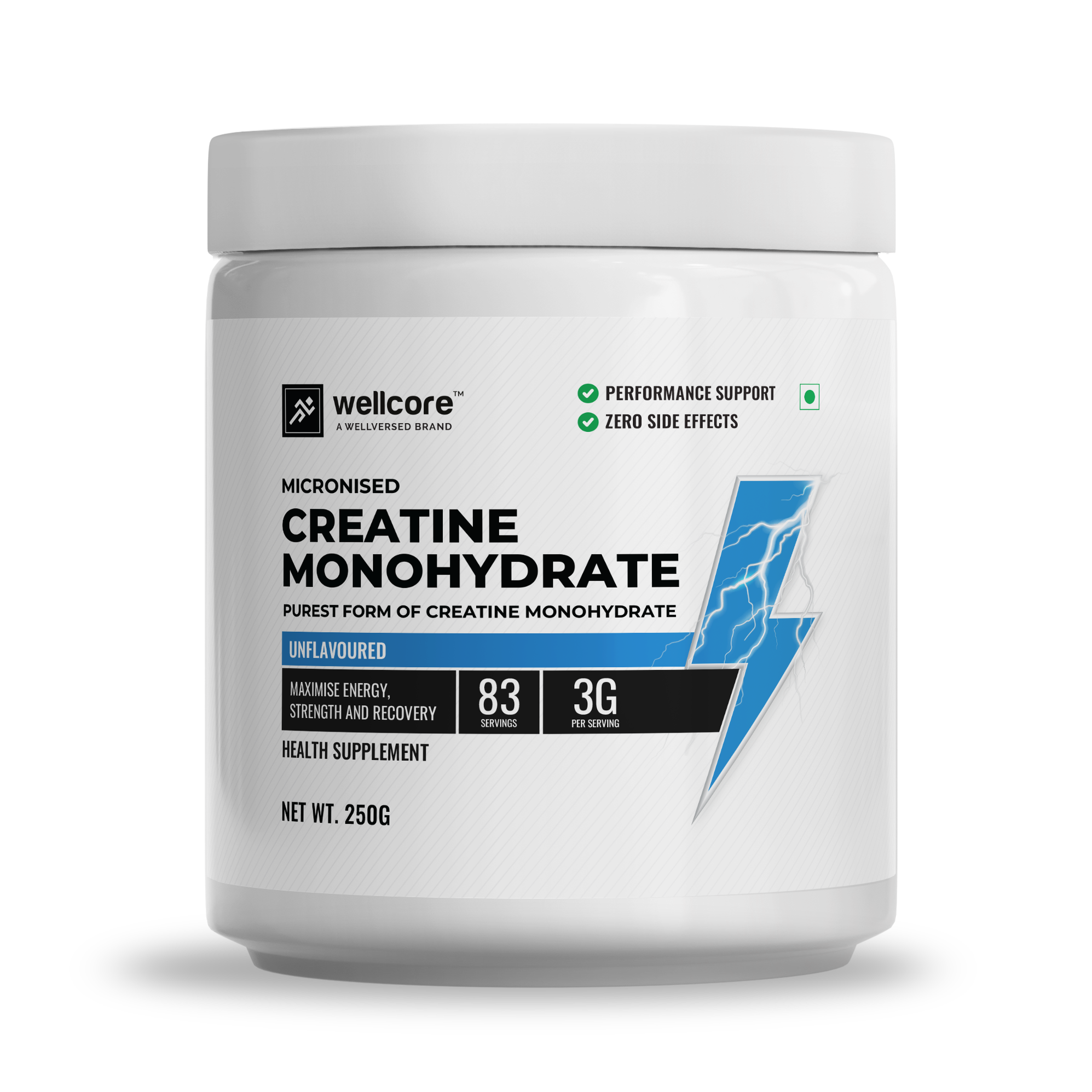
Product example · Read the label
Compare Wellcore Creatine
If you are considering a supplement, check the ingredient list, serving size and seller information. The example below is for product research, not a recommendation that you need creatine.
Does creatine make you gain weight?
It can increase scale weight, particularly when you first start. Creatine helps increase creatine and phosphocreatine stores in muscle, and this can be accompanied by more water held within muscle tissue. The change varies and should not automatically be interpreted as fat gain.
If you track body weight for a sport, weigh-in, or personal goal, keep this possible change in mind. Use more than one measure of progress, such as training performance and how you feel, rather than judging success from one weigh-in. If rapid or unexplained swelling or weight change occurs alongside other symptoms, seek medical advice rather than assuming it is a normal supplement effect.
Can creatine cause bloating or stomach problems?
Some users report digestive discomfort. Taking a very large amount at once may be harder to tolerate than smaller servings. A loading phase is used in some protocols, but it is not essential for everyone; taking a smaller daily amount can still increase muscle creatine stores over time.
Follow the product label and avoid improvising with large doses. If discomfort persists, stop taking the supplement and ask a healthcare professional. Do not assume that all bloating is caused by creatine, especially if it is severe or accompanied by pain, vomiting, blood in stool, or other concerning symptoms.
Does creatine hurt your kidneys?
For healthy adults, available research on standard creatine monohydrate use has generally been reassuring and has not shown convincing evidence of kidney damage. That does not mean everyone should take it, or that the evidence fully applies to people with diagnosed kidney disease.
One reason this concern comes up is that creatine supplementation can increase measured blood creatinine in some circumstances. Creatinine is used as one marker when assessing kidney function, but it is affected by more than kidney injury alone. A higher result should be interpreted by a clinician in context, not dismissed and not treated as proof of damage on its own.
If you have kidney disease, unexplained abnormal kidney tests, diabetes, high blood pressure, or take medicines that can affect kidney function, ask your healthcare professional before using creatine. For a detailed explanation, see our guide to creatine and kidney safety.
For additional context, a 2025 systematic review and meta-analysis reported a modest rise in serum creatinine without a statistically significant change in GFR. A 2026 review of randomized trials likewise found creatinine-related changes but no significant differences in some kidney markers measured independently of creatinine. The findings do not make every individual situation risk-free; they reinforce why lab results should be interpreted by a clinician.
Supplement check · Before buying
Review the product details
Avoid judging a supplement by marketing claims alone. Check the current label and ask a healthcare professional about suitability if you have a medical condition or take medication.
Does creatine give you heart problems?
There is no strong evidence that standard creatine monohydrate use causes heart problems in healthy adults. However, that statement should not be taken as a guarantee for every person or every supplement blend. Many products marketed for workouts contain several ingredients, and some include stimulants that are separate from creatine itself.
If a product combines creatine with caffeine or other active ingredients, check the full label rather than assuming that all effects come from creatine. People with heart disease, a history of abnormal heart rhythms, uncontrolled blood pressure, or medicines that affect heart rate or fluid balance should ask their clinician before using sports supplements.
Seek urgent medical attention for chest pain, fainting, severe shortness of breath, or a fast or irregular heartbeat with significant symptoms. Do not try to diagnose these symptoms as a harmless supplement effect.
Does creatine cause dehydration or cramps?
Research has not consistently supported the common claim that creatine causes dehydration or muscle cramps in healthy users. Hydration needs still depend on the weather, exercise intensity, duration, sweating and personal health. Drink fluids appropriately and follow any fluid restrictions given by your healthcare professional.
You do not need to force excessive water intake simply because you take creatine. If you train in heat, plan breaks and fluids according to your activity and environment. People with kidney or heart conditions may need individualized fluid advice.
What about hair loss, liver damage or other risks?
Hair loss and DHT
Online discussions often connect creatine with hair loss through dihydrotestosterone (DHT). Evidence is limited and does not establish that creatine causes hair loss in all users. If you are concerned about hair thinning, consider other common causes and speak with a qualified clinician rather than treating a social-media claim as settled science. Our creatine and DHT guide covers the question in more detail.
Liver concerns
Creatine is not established as a cause of liver damage when standard creatine monohydrate is used by healthy adults, but a supplement label, product quality, dose and a person's health all matter. If you have liver disease, abnormal liver tests or take medicines that affect the liver, seek medical advice before adding supplements. Symptoms or abnormal test results need professional assessment.
Does creatine cause cramps?
Controlled research has not consistently found an increased risk of muscle cramps from creatine in healthy users. Cramps can have many causes, including exercise intensity, fatigue, heat, illness and other health factors. Recurrent or severe cramps should not automatically be blamed on creatine.
Is creatine bad for teenagers?
Evidence and guidance for adults should not automatically be applied to children and teenagers. Anyone under 18, along with their parent or guardian, should discuss sports supplements with a qualified healthcare professional who understands adolescent health and the person's training and nutrition. Supplements should not replace adequate food, sleep, coaching and recovery.
Who should avoid creatine or get medical advice first?
Talk to a healthcare professional before starting creatine if you:
- Have kidney disease, reduced kidney function, abnormal kidney tests or a history of kidney injury.
- Have a heart condition, uncontrolled blood pressure, liver disease or another significant medical condition.
- Take prescription medicines or several other supplements and are unsure about possible interactions.
- Are pregnant, breastfeeding, under 18, or have been told to limit fluids or certain nutrients.
- Have unexplained symptoms or are undergoing medical testing.
This list is not a diagnosis or a claim that creatine is always unsafe in these situations. It means your circumstances deserve individualized advice rather than a generic recommendation.
How to reduce avoidable problems
Use a sensible amount
Follow the product label and professional guidance. Avoid taking extra servings in the belief that more is always better.
Check the ingredients
Prefer clearly labelled products and check whether a blend includes caffeine or other active ingredients.
Pay attention to symptoms
If an effect is persistent, severe or unusual, stop and seek qualified advice instead of pushing through it.
Creatine monohydrate is the form most studied. A loading phase may be used in some protocols but is not required for everyone. Do not use supplements as a replacement for balanced meals, sleep, training or treatment for a medical condition.
Tell your clinician about supplements before lab testing. If you develop symptoms such as chest pain, severe shortness of breath, fainting, markedly reduced urination, visible blood in urine, or severe swelling, seek prompt medical care.
How do you know whether creatine is worth taking?
Creatine may help some people improve repeated high-intensity exercise performance when paired with consistent training. It is not essential for everyone. Think about your training goals, budget, health situation and whether you can choose a clearly labelled product. If you do not have a clear reason to use it, you can simply skip it.
If you are researching Wellcore specifically, our Wellcore creatine safety guide discusses general evidence, product-label checks and who should get advice first. A brand name does not change the need to consider personal health and product quality.
Related product guide
Explore Wellcore Creatine
Creatine is optional, and a product's brand name does not guarantee it is suitable for you. Compare the label and consider your health needs before deciding.
Frequently asked questions
Are there side effects from creatine?
Possible effects include weight gain related to water stored in muscle and digestive discomfort in some people. Creatine can also affect measured creatinine. Not everyone experiences side effects, and symptoms should be assessed in context.
What bad things does creatine do to you?
Many healthy adults tolerate creatine monohydrate well, but it may cause weight changes or digestive symptoms. Safety depends on dose, product, health conditions and other substances used. It is not essential for everyone.
Does creatine give you heart problems?
Research has not established that standard creatine monohydrate causes heart problems in healthy adults. People with heart conditions should ask their clinician first, and stimulant-containing blends need separate label checks.
Is creatine bad for your kidneys?
Research in healthy adults is generally reassuring, but creatine may affect blood creatinine. People with kidney disease or abnormal kidney tests should get individual advice. Read our kidney safety guide.
Can creatine cause hair loss?
Current evidence does not establish that creatine causes hair loss in all users. Hair loss has many possible causes; seek professional advice if it concerns you.
Is creatine slecht voor je?
This Dutch phrase means “is creatine bad for you?” For healthy adults, standard creatine monohydrate is generally well tolerated in research, but possible side effects and individual health conditions matter. It is not essential for everyone.
Do I need to take creatine every day?
Common protocols use regular daily intake, but the right approach depends on your goals and health. Follow the label and qualified guidance rather than using a dose based on online claims alone.
Related Creatine Guides
Is Creatine Safe for Kidneys?
Learn how creatine and creatinine differ and what to ask about kidney tests.
Read kidney guide →Is Wellcore Creatine Safe?
Review common concerns and precautions for people considering the product.
Read safety guide →This article is for general education and is not a substitute for medical diagnosis, treatment or personal advice. Speak with a qualified healthcare professional if you have a medical condition, take medicines, or experience concerning symptoms. Supplement products and labels may change.